

 Available in US
The Legal Status of Online Casino Games in Australia
Australia draws a clear legal distinction between online wagering products. Sports betting may be offered by operators holding the relevant state or territory licence, whereas online casino games are prohibited when supplied to customers in Australia. This distinction applies even when a service is operated from outside the country or presents itself as an established international gambling business.
The central federal law is the Interactive Gambling Act 2001. It makes it illegal for gambling providers to offer certain online services to people in Australia. The prohibition concerns the supply of the service, not merely the location of the company’s headquarters or the wording used on its website. A provider does not become lawful for Australian customers simply because its servers, corporate entity or licence is located in another jurisdiction.
Which casino products are prohibited
Under the Interactive Gambling Act, online casino games offered to an Australian customer are classified as prohibited interactive gambling services. The category includes the principal products commonly associated with internet casinos:
- [pokies;
- roulette;
- blackjack](/pokies-casino-games/); and
- live dealer tables.
Use this index to quickly review the key bonus, licensing, deposit, and payout details available for each casino operator in Australia. It is designed as a concise reference before you explore an operator further.
Bonus: up to A$750 + 50 jackpot spins, 35x wagering · Payout speed: crypto ~90 minutes, fiat 1-5 days · Min. deposit: A$30 Kingmaker offers up to A$750 plus 50 jackpot spins with 35x wagering. Crypto payouts are listed at around 90 minutes, while fiat payouts take 1–5 days, and the minimum deposit is A$30.
License: Curacao eGaming OGL/2024/923/0383 (Antillephone N.V.) · Bonus: up to A$2,000 + 100 free spins across 2 deposits · Min. deposit: A$30 WinSpirit Casino operates under Curacao eGaming licence OGL/2024/923/0383, issued to Antillephone N.V. Its offer includes up to A$2,000 and 100 free spins across two deposits, with a A$30 minimum deposit.
License: Curacao Gaming Control Board · Bonus: up to A$5,000 + 400 free spins JustCasino is licensed by the Curacao Gaming Control Board. Its headline offer is up to A$5,000 plus 400 free spins.
License: Curacao eGaming Licence · Min. deposit: A$10 True Blue operates under a Curacao eGaming licence. The minimum deposit is A$10.
License: Curacao eGaming (Roby Games Ltd) · Bonus: 100% up to A$750 + 200 free spins Roby Casino is licensed by Curacao eGaming through Roby Games Ltd. Its promotion provides 100% up to A$750 together with 200 free spins.
License: Curacao eGaming Licence · Min. deposit: A$10 LevelUp operates under a Curacao eGaming licence. It has a minimum deposit of A$10.
License: Curacao, operated by Dama N.V. · Bonus: 325% up to 5.25 BTC + 250 free spins across 4 deposits 7Bit Casino is operated by Dama N.V. under a Curacao licence. Its promotion offers 325% up to 5.25 BTC plus 250 free spins across four deposits.
License: Tobique Gaming Commission · Bonus: up to A$8,000 + 400 free spins across 4 deposits · Payout speed: crypto ~10-15 minutes, fiat 1-5 days · Min. deposit: A$30 SkyCrown is licensed by the Tobique Gaming Commission and offers up to A$8,000 plus 400 free spins across four deposits. Crypto payouts are listed at around 10–15 minutes, fiat payouts at 1–5 days, and the minimum deposit is A$30.
Bonus: up to A$6,600 + up to 250 free spins across 4 deposits DragonSlots Casino features a promotion of up to A$6,600 plus up to 250 free spins across four deposits.
License: Curacao OGL/2024/1335/0780 · Bonus: up to A$1,000 + 150 free spins, wager-free · Min. deposit: EUR 20 Vegaz Casino operates under Curacao licence OGL/2024/1335/0780. Its offer includes up to A$1,000 and 150 free spins with no wagering requirement; the minimum deposit is EUR 20.
The rule applies to real-money online play. It is therefore not limited to one game type, software supplier or presentation format. A digital pokies service remains within the prohibition whether the games are displayed as traditional reels, branded titles or another electronic format. Roulette and blackjack are covered whether the result is generated by software or presented through a live dealer table.
The same legal boundary matters when a website uses broader labels such as “casino games” or “real money” gaming. The description chosen by a provider does not alter the statutory character of the service. If the product supplies prohibited online casino play to an Australian customer, a change in branding cannot make it an authorised Australian gambling product.
The position of Australian operators
There is no domestically licensed real-money online casino for Australian players. No Australian gambling licence exists for casino games because offering that product to Australians is against the law. This is not a gap in a public list of available casino licences; it follows from the prohibition itself.
Licensed Australian gambling activity is therefore not a general authorisation to provide every type of online gambling. The fact that sports betting is legal and licensed at state and territory level does not extend that permission to pokies, roulette, blackjack or live dealer tables. A wagering licence for a lawful product cannot be treated as a casino licence, and no Australian operator can rely on such a licence to offer prohibited online casino games.
Legal Status Online casino games are prohibited in Australia
Key Legislation Interactive Gambling Act 2001
Regulator ACMA (Federal)
Permitted Products Sports and race wagering
This distinction also prevents a common legal misunderstanding. The existence of regulated betting services does not mean that Australia has a general online gambling licence under which casino products can be supplied. The relevant permission depends on the product and the applicable legal framework. Sports betting occupies a permitted category; online casino games do not.
Provider-focused prohibition
The Interactive Gambling Act primarily targets the provider of the prohibited service. Its operation is directed at businesses that offer or supply unlawful interactive gambling services to Australian customers. The law does not establish that an Australian commits a criminal offence merely by placing a bet at an offshore site.
That provider-focused structure should not be confused with legal approval of the activity. The absence of a player offence does not create an Australian casino licence, remove the prohibition on supply or turn an offshore service into a lawful domestic product. It describes where the principal statutory responsibility lies: with the provider offering the prohibited service to the Australian market.
The distinction is significant because legal discussions often collapse two separate questions:
- whether the provider may lawfully supply the service to Australians; and
- whether the individual customer is committing a crime by using it.
For online casino games, the first question has a clear answer under the stated framework: the supply of the prohibited service to an Australian customer is unlawful. The second question must not be expanded into a claim that the service itself is approved or licensed. Those are different legal propositions.
Offshore location does not change the Australian position
An offshore casino may be incorporated outside Australia and may operate under a foreign legal system, but that fact does not create authority to serve Australian customers. The Australian legal assessment concerns the provision of the online gambling service to people in Australia. A foreign corporate address cannot substitute for an Australian authorisation that does not exist.
Foreign licensing may regulate the operator under the law of another jurisdiction. It does not become an Australian gambling licence, and it does not override the Interactive Gambling Act 2001. Consequently, an offshore licence cannot be presented as evidence that online pokies, roulette, blackjack or live dealer tables are lawful for Australian customers.
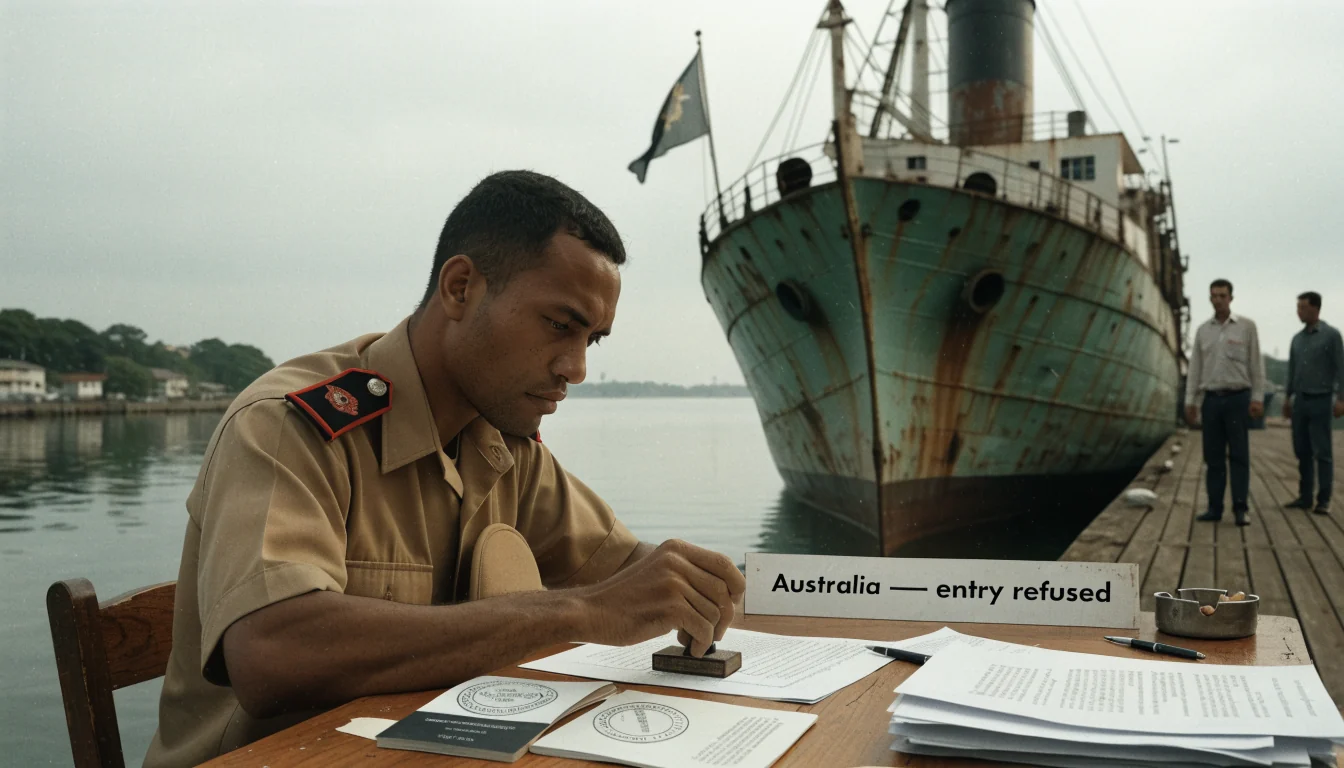
The legal boundary remains the same regardless of the game interface, the company’s location or the jurisdiction named in its terms and conditions: no domestically licensed real-money online casino exists for Australian players, and casino games cannot lawfully be offered to them under an Australian gambling licence.
Why terminology matters
Australian usage commonly refers to electronic gaming machines as pokies. In legal and regulatory analysis, however, the relevant issue is not the colloquial name but whether the service supplies online casino play to an Australian customer. Calling a product “pokies,” “slots,” an interactive game or a casino feature does not alter its legal classification.
Similarly, “live casino” is a presentation method rather than a separate legal permission. A live dealer roulette or blackjack table remains an online casino service when supplied over the internet. The presence of a human dealer does not move the product into the permitted sports-wagering category.
The same reasoning applies to bundled platforms. A website may lawfully provide one type of gambling product only where it holds the relevant authority for that product. A sports-betting service cannot assume that its wagering permission covers casino games, and the addition of casino content does not become lawful merely because it appears within an otherwise permitted account or application.
The legal status of online casino games in Australia is therefore product-specific and provider-focused. Sports betting can be licensed at state and territory level, but online pokies, roulette, blackjack and live dealer tables are prohibited interactive gambling services when offered to Australian customers. No Australian casino licence exists for those products, and a foreign location or foreign licence does not change that position.
Australia’s Gambling Regulation and Licence Registers
Australia does not have one overarching gambling statute or a single national gambling authority. Responsibility is divided between the Commonwealth and the states and territories, with each level performing different functions. This division matters when assessing an operator’s regulatory position: a licence issued for one gambling product or jurisdiction does not automatically authorise every form of gambling throughout Australia.
Online casino games including pokies, roulette, blackjack, and live dealer tables.
Sports betting and race wagering under state or territory licences.
The Interactive Gambling Act primarily targets the provider of the service.
At the federal level, the Australian Communications and Media Authority (ACMA) monitors compliance with and enforces Australia’s interactive gambling laws. Its role is concerned with online services and the way prohibited or unlicensed gambling activity is addressed across the country. ACMA can investigate services that appear to breach the applicable rules and can take disruption measures, including directing internet service providers to block access to websites operating unlawfully.
The federal framework therefore operates alongside, rather than instead of, state and territory licensing systems. Local operators offering gambling products to Australian residents must hold the relevant licence for the product and jurisdiction concerned. A business may be licensed for wagering without being authorised to provide other gambling products. The existence of a gambling licence somewhere in Australia is consequently not sufficient evidence that every service offered by an operator is regulated.
Federal and jurisdictional responsibilities
State and territory authorities administer licensing and supervision within their respective jurisdictions. Their responsibilities can include licensing operators, approving gambling products, overseeing compliance, and imposing conditions on licensed activities. The precise institutional arrangements differ between jurisdictions, so the authority responsible for one operator may not be the authority responsible for another.
The Northern Territory Racing Commission is particularly significant for online wagering. It acts as the de facto regulator for national online bookmakers, meaning that a licence issued in the Northern Territory may be associated with a bookmaker accepting customers across multiple Australian jurisdictions. This does not turn the Commission into a general regulator for all gambling products, nor does it create an Australian casino licence. Its relevance is primarily connected with licensed wagering.
Other regulatory bodies operate within their own state or territory frameworks. Examples include the Victorian Gambling and Casino Control Commission, the Independent Liquor and Gaming Authority in New South Wales, the Tasmanian Liquor and Gaming Commission, the Australian Capital Territory Gaming and Racing Commission, the Gaming and Wagering Commission in Western Australia, and the South Australian authority responsible for consumer and gambling services. These bodies should be understood as jurisdictional regulators rather than branches of one unified national licensing office.

The division also means that regulatory terminology must be read carefully. “Licensed in Australia” is not a complete description unless the relevant product, licence category and issuing authority are identified. A licence connected with race or sports wagering does not establish authorisation for unrelated gambling services. Regulatory status is tied to the activity covered by the licence.
Where Australian licence information can be checked
ACMA publishes a register of Australian-licensed interactive wagering service providers. This is the appropriate federal reference point for checking whether an interactive wagering provider appears within the Australian licensing framework. The register is relevant to licensed wagering services; it should not be treated as a register of domestically licensed real-money online casinos.
Licence verification should begin with the exact legal entity operating the service and the product it claims to provide. A trading name may differ from the name appearing on a licence, while a corporate group may operate several brands under different arrangements. The licence number, issuing authority and authorised activity therefore need to correspond. A licence number copied from a website, advertisement or third-party page is not independently meaningful until it has been cross-referenced on the regulator’s official website.
This process is more reliable than relying on logos or general statements such as “Australian regulated”. A regulatory logo does not by itself establish that the named service is licensed, that the licence remains valid, or that the licence covers the relevant gambling activity. The decisive information is the regulator’s own record and the scope attached to the licence.
Foreign registers and their limits
Offshore operators commonly refer to licences from Malta or Curaçao rather than an Australian gambling licence. The Malta Gaming Authority and Curaçao licensing authorities maintain public registers where a licence number and its status can be checked. These registers can help establish whether a foreign entity holds the foreign authorisation it claims to hold.
Foreign Licensing Limits While offshore operators may hold licences from jurisdictions like Malta or Curaçao, these do not grant authority to serve Australian customers. A foreign licence does not override the Interactive Gambling Act 2001 or establish an Australian gambling licence.
That verification has a limited purpose. A Malta or Curaçao record confirms, at most, the relationship between the operator and the foreign licensing authority. It does not convert a foreign licence into an Australian licence, and it does not establish permission to serve Australian residents under Australia’s regulatory framework. Foreign registration and Australian authorisation are separate questions.
The same distinction applies to references to international corporate registration, payment processing or dispute-resolution arrangements. None of those details substitutes for a relevant Australian licence. Regulatory verification must remain tied to the jurisdiction in which the service is offered and to the product being supplied.
A practical verification framework
A structured check can be stated without treating every gambling service as interchangeable:
- Identify the product. Determine whether the service describes itself as wagering or as another form of gambling.
- Identify the legal operator. Record the corporate name rather than relying only on a brand name.
- Locate the claimed licence number. Note the authority said to have issued it.
- Check the issuing regulator’s official register. Confirm that the number corresponds to the same legal entity.
- Read the licence scope. Establish whether the authorisation covers the activity being presented.
- Separate foreign and Australian status. A foreign register can confirm foreign licensing, but it cannot demonstrate Australian authorisation.
This sequence also explains why a foreign licence badge is not a substitute for Australian regulatory evidence. A regulator’s register is a record of a defined legal relationship, not a general quality label. Where the relevant Australian authority does not list an operator or product, a separate foreign entry cannot fill that gap.
Australia’s regulatory structure is therefore best understood as layered: federal oversight addresses interactive gambling law and enforcement, while state and territory authorities administer relevant licensing arrangements. ACMA’s register is useful for Australian-licensed interactive wagering providers, and foreign registers can be used to verify foreign claims. Neither type of record should be expanded beyond what it actually establishes.
Bonuses, Promotions and the Limits of Legal Advertising
Bonuses and promotions cannot be treated as ordinary marketing material in the Australian online gambling context. The legal issue is not limited to whether an offer is attractive, clearly worded or accompanied by responsible-gambling information. It begins with the underlying service being promoted and with the audience to whom the promotion is directed.

The Interactive Gambling Act 2001 prohibits providers from offering certain online gambling services to people in Australia. Online casino games, including pokies, roulette, blackjack and live dealer tables, fall within the category of prohibited interactive gambling services when offered to an Australian customer. A bonus attached to such a service does not change its legal character. A deposit incentive, free-play offer or promotional code remains part of the marketing of a prohibited service.
Why a bonus is not a separate legal category
Promotional language can make an online gambling service appear less consequential than the underlying activity. Terms such as “welcome offer”, “free spins”, “cashback” or “VIP reward” describe the commercial mechanism rather than the legal position. They do not create an Australian licence, convert an offshore casino into a locally authorised provider or make online casino games permissible for Australian customers.
The same distinction applies to advertising that avoids explicit references to gambling products. A campaign may direct users to a brand, an account-registration page or a promotional landing page without describing a particular game. If the purpose or effect is to attract Australians to a prohibited interactive gambling service, the surrounding wording does not remove the regulatory concern.
This is why inducements must not be assessed in isolation. The relevant questions include:
- What gambling service is being promoted?
- Is the service permitted to be offered to Australian residents?
- Is the promotion directed at, or reasonably accessible to, an Australian audience?
- Does the material encourage account opening, deposits or continued participation?
- Does it publish or facilitate access to a prohibited or unlicensed service?
For online casino products, the answer to the second question is decisive: no domestically licensed real-money online casino exists for Australian players. Australian gambling licences cover permitted products such as sports and race wagering, not the provision of online casino games to Australian residents.
Inducements and Australian advertising limits
Australian advertising restrictions apply particularly strongly to inducements. Sign-up bonuses, first-deposit bonuses, free bets and refer-a-friend offers are not neutral descriptions of a service. They are designed to encourage a person to open an account, fund it or introduce another participant.
Such material must not be used to promote prohibited online casino services to Australians. Nor should it be presented as evidence that an offshore casino is suitable, lawful or authorised for the Australian market. A foreign promotional campaign may operate under the rules of the jurisdiction in which its provider is licensed, but that foreign framework does not authorise the provider to serve Australian customers.
Prohibited Promotions Promoting sign-up bonuses, free spins, or deposit incentives for online casino games is illegal as it facilitates access to prohibited services in Australia.
The Interactive Gambling Act targets the provider rather than the individual player. Australians are not committing a crime merely by placing bets at offshore sites. That distinction does not make advertising or promotion of the offshore service lawful. The statutory focus remains important because it separates the legal exposure of the provider and promoter from the position of the individual who encounters or uses the service.
A publisher also cannot assume that a disclaimer cures an otherwise problematic advertisement. Statements such as “play responsibly”, “18+” or “terms apply” may communicate general conditions, but they do not turn a prohibited online casino into a permitted Australian gambling product. Responsible-gambling wording is necessary where gambling services are discussed or advertised, yet it is not a substitute for authorisation.
Enforcement and the reach of promotional material
The Australian Communications and Media Authority can direct internet service providers to block sites operating in breach of the Interactive Gambling Act. Blocking action is relevant to promotional content because affiliate pages, comparison material and branded campaigns can form part of the route by which users reach an illegal gambling service.
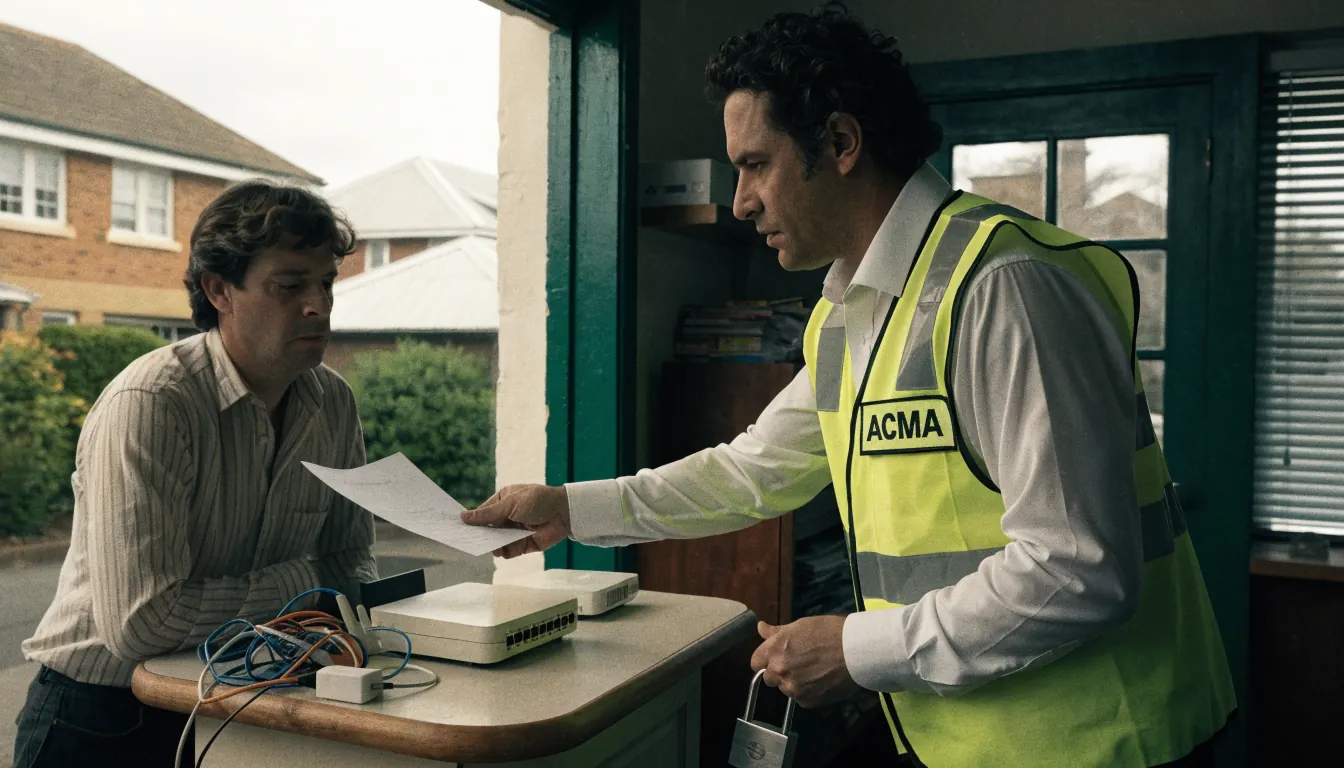
The available figures contain a stated source discrepancy. One reported position is that, as of August 2025, ACMA had blocked 1,296 illegal sites and affiliates since 2019. Another reported position states that, as of March 2026, ACMA had directed internet service providers to block 1,564 illegal gambling and affiliate websites. These figures should not be silently merged or treated as interchangeable: they refer to different reported dates and describe the enforcement position in different source accounts.
A similar discrepancy concerns market exits. One account states that more than 220 illegal gambling services voluntarily exited the Australian market following ACMA action. Another states that over 220 online gambling services had withdrawn from the Australian market since the reforms. The wording is close, but the scope and formulation are not identical. Both should therefore be identified as reported figures rather than presented as a single precisely defined measure.
These actions show why promotional pages can attract regulatory attention even when they do not operate the gambling platform themselves. Affiliate links, branded bonus pages and referral campaigns may increase access to a prohibited service. Publishing advertisements or links for prohibited or unlicensed interactive gambling services is itself a basis for website blocking, and content should not knowingly facilitate the provision of such services to Australians.
What compliant discussion can and cannot do
Informational coverage may explain the legal limits on bonuses and promotions, but it should not reproduce an inducement in a way that functions as advertising. In particular, material aimed at Australian customers should not:
- promote an online casino, online pokies, roulette, blackjack or online poker;
- advertise a sign-up or first-deposit bonus;
- offer or promote free bets or refer-a-friend rewards;
- imply that a Malta, Curacao or other foreign licence authorises service to Australians;
- describe an offshore casino as an Australian-licensed or ACMA-approved option;
- publish a link intended to direct Australians to a prohibited or unlicensed interactive gambling service.
A foreign licence may establish that an operator is subject to oversight in another jurisdiction. It does not establish permission to provide online casino games in Australia. Promotional content that presents the foreign licence as an answer to the Australian legal question is therefore misleading.
The boundary is also relevant to apparently educational comparison pages. A neutral explanation of why inducements are restricted differs from a ranking of offers, a list of current bonuses or a call to register. The former addresses legal and advertising conditions; the latter can become promotion or facilitation. Where the underlying product is prohibited for Australian customers, changing the format from an advertisement to a “review” or “guide” does not resolve the problem.
Responsible gambling information should accompany discussion of gambling services and harm reduction should not be omitted. BetStop – the National Self-Exclusion Register™ and Gambling Help Online are relevant Australian support resources. Their existence, however, does not make an online casino promotion permissible. In this setting, responsible communication requires both harm-reduction information and an accurate statement that bonuses cannot lawfully be used to market prohibited online casino services to Australian customers.
Payment Restrictions Attention Credit cards and cryptocurrency have been banned for online gambling in Australia since 11 June 2024.
Deposits, Withdrawals and the Australian Payment Framework
Payment arrangements cannot be separated from the legal status of the gambling product being funded. In Australia, the central distinction is between licensed wagering, such as sports and race betting, and online casino services. A payment method may be technically available without making the underlying gambling service lawful. Depositing funds, requesting a withdrawal or receiving a payment does not create an Australian licence for an operator that is not entitled to offer its product to Australian customers.
Licensed wagering and prohibited casino transactions
Australian gambling regulation permits licensed sports and race wagering, subject to the applicable federal and state or territory framework. Online casino games, including pokies, roulette, blackjack and live dealer tables, occupy a different legal category. They are prohibited interactive gambling services when offered to an Australian customer.
This distinction is important when interpreting payment information. A bookmaker authorised to provide wagering is not thereby authorised to operate an online casino. The existence of an Australian payment option on a website is also not evidence that the website is an Australian-licensed gambling service. Payment processing and gambling authorisation are separate questions.

There is no domestically licensed real-money online casino for Australian players. Consequently, no Australian casino licence can be used to validate deposits or withdrawals for online casino games. Foreign licensing does not alter that position. A Malta or Curacao licence may be recorded by the relevant foreign authority, but it does not authorise an operator to provide online casino games to Australian residents under Australian law.
What payment information can and cannot establish
Terms such as “instant deposits”, “secure withdrawals” or “local payment support” describe a transaction process, not the legal status of the gambling service. They may indicate that an operator accepts Australian customers in practice, but they do not establish that the operator is permitted to do so.
The same caution applies to references to banking institutions, payment gateways or account verification. A payment intermediary is not a gambling regulator. Its involvement cannot substitute for the licence required for a lawful wagering product, and it cannot turn a prohibited online casino service into a permitted one.
For licensed wagering, payment documentation may be relevant to account administration, identity checks and the movement of funds. Those operational matters should not be confused with the broader legal question of whether the product itself may be offered. For online casino games, the underlying prohibition remains decisive regardless of the payment route used.
Verification Framework
Determine if the service is for wagering or prohibited online casino play.
Note the actual corporate name rather than just the brand.
Cross-reference the licence number with the issuing regulator’s official website.
Confirm if the authorisation actually covers the specific activity being offered.
Credit cards and cryptocurrency
Credit cards and cryptocurrency must not be promoted as deposit methods for Australian online gambling. Both have been banned for online gambling since 11 June 2024. This restriction applies to the payment context and should not be treated as a promotional detail.
The ban also illustrates why payment pages require careful interpretation. A service may advertise a broad range of funding methods, but an advertised method is not necessarily lawful for every gambling product or every customer in Australia. Payment availability, payment legality and gambling-product legality are distinct concepts.
Credit-funded payment methods must not be promoted for online betting. This includes arrangements that do not appear as conventional credit-card deposits but nevertheless allow gambling to be financed through credit. Descriptions of payment facilities therefore need to avoid implying that borrowed funds are an acceptable way to participate in Australian online gambling.
Deposits and withdrawals in practice
A deposit is the transfer of funds into a gambling account. A withdrawal is the transfer of funds out of that account. These definitions describe the movement of money only; they do not determine whether the account is connected to a lawful Australian service.
Withdrawal conditions can also have practical significance independent of the legal analysis. An operator may impose identity or source-of-funds checks, request supporting information, or delay the release of funds under its own terms. Such conditions do not prove that the operator is licensed in Australia. Nor does a completed withdrawal demonstrate regulatory protection equivalent to that available through a domestic licence.
The legal risk is particularly material where an offshore casino is involved. Offshore casinos are not Australian-licensed casino operators, and a foreign licence should not be presented as permission to serve Australian players. Payment disputes may therefore involve a service outside the Australian licensing framework. That distinction is relevant to the level of protection and recourse available, without implying that offshore access is lawful or endorsed.

The scale of gambling losses and payment flows
Payment data also forms part of the wider picture of gambling participation. Australia reported approximately $32 billion in gambling losses during 2022–2023. Another reported figure places losses on legal forms of gambling at approximately $25 billion each year. These figures are not interchangeable: they reflect different descriptions or scopes of gambling losses, and the discrepancy should be stated rather than silently resolved.
Online gambling is the fastest-growing gambling segment. At the same time, reports indicate that the amount of money lost on gambling services based outside Australia has reduced since the reforms. Neither observation establishes that every online transaction is lawful. Growth in online activity and changes in offshore losses describe market patterns, not authorisation for prohibited casino products.
A practical framework for interpreting payment claims
Payment statements concerning Australian gambling services can be assessed through three separate questions:
- What product is being offered? Licensed sports and race wagering must be distinguished from prohibited online casino games.
- What is the payment method? Credit cards, cryptocurrency and credit-funded methods must not be promoted for online gambling.
- What does the payment information prove? A deposit option, withdrawal facility or payment-provider logo does not establish an Australian gambling licence.
This framework prevents a common category error: treating the ability to move money as evidence that the gambling service is lawful. In Australia, payment functionality cannot override the legal boundary governing the product. For online casino games, no domestic real-money licence exists, and transaction arrangements do not change that fact.
Safety, Offshore Licensing and Responsible Access
Offshore access does not create a lawful Australian online casino market. Under the Interactive Gambling Act 2001, providing online casino games to Australian customers is prohibited. This includes pokies, roulette, blackjack and live dealer tables. No Australian licence authorises a domestic real-money online casino for Australian players, and a foreign licence does not change that position.
The distinction between the provider and the individual player remains important. The Interactive Gambling Act targets providers of prohibited interactive gambling services rather than making it a crime for an Australian to place a bet with an offshore site. That limited point should not be confused with an assurance that offshore access is safe, protected or legally equivalent to using a locally licensed wagering service. It describes the focus of the law, not an endorsement of the service.
Summary of Risks
- No domestically licensed real-money online casino exists for Australian players.
- Offshore licences (Malta/Curaçao) do not provide Australian legal standing.
- Promotional inducements cannot make prohibited services lawful.
- Payment availability does not equal regulatory authorisation.
What an offshore licence does — and does not — establish
Offshore operators commonly hold licences from Malta or Curaçao rather than an Australian casino licence. Such a licence may indicate that an overseas authority has created a regulatory relationship with the operator. It does not authorise the operator to provide online casino games to Australian residents, and it does not make the operator Australian-licensed.
A foreign register can therefore answer a narrow question: whether a stated foreign licence number and status correspond to an entry maintained by the relevant foreign authority. It cannot answer the more important Australian-law question of whether the operator may lawfully offer casino games to customers in Australia. The two questions should not be merged.
This distinction also limits the evidential value of licensing language on a website. Terms such as “licensed”, “regulated” or “internationally authorised” may refer to a foreign jurisdiction, not to permission to operate in Australia. A foreign seal or licence number is not evidence of ACMA approval. ACMA does not license online casinos for Australian customers.
The absence of an Australian casino licence is not a minor administrative gap. It follows from the underlying prohibition: offering the product to Australians is unlawful. Consequently, a safety assessment cannot reasonably begin with the assumption that an offshore casino is a locally regulated alternative. The relevant starting point is that the service operates outside the Australian licensing framework.

Practical limits of offshore protection
Offshore sites may not provide the same practical safeguards associated with Australian-regulated gambling services. The consequences can include uncertainty about complaint handling, the enforceability of contractual terms, identity checks, account restrictions and access to deposited funds. The available facts do not support a universal claim that every offshore operator will fail in any particular way. They do support caution about treating a foreign licence as a substitute for Australian consumer protection.
Regulatory geography also affects accountability. A dispute with an offshore provider may involve a foreign operator, foreign terms and a foreign authority. That can make the applicable process less transparent to an Australian customer. The existence of a public foreign register may help establish whether a licence is genuine, but it does not guarantee a successful dispute outcome or remove the risks associated with a prohibited service.
ACMA’s enforcement activity illustrates the limits of relying on continued website availability. ACMA can direct internet service providers to block sites operating in breach of the Interactive Gambling Act. The supplied figures contain a date discrepancy: one account states that ACMA had blocked 1,296 illegal sites and affiliates since 2019 as of August 2025, while another states that 1,564 illegal gambling and affiliate websites had been blocked as of March 2026. These figures should not be silently treated as interchangeable; they refer to different reporting points and are presented in the available material as separate versions.
The same caution applies to market exits. One formulation reports that more than 220 illegal gambling services voluntarily exited the Australian market following ACMA action; another says that over 220 online gambling services had withdrawn since the reforms. The wording differs, although both describe substantial withdrawal after enforcement measures. A site remaining accessible at a particular moment is therefore not evidence of Australian legality or regulatory approval.
Responsible access and gambling harm
Safety also concerns the decision to gamble, not only the status of the website. Gambling harm can involve financial loss, secrecy, disrupted relationships, impaired work or study, and repeated attempts to recover losses. These risks are not removed by a foreign licence, a polished interface or the availability of customer support.
Is it a crime for an Australian to use an offshore casino?
No, the Interactive Gambling Act primarily targets the providers rather than the individual players.
Can a sports betting licence be used for casino games?
No, a wagering licence for a lawful product does not extend permission to pokies, roulette, or blackjack.
Does a foreign licence mean the site is safe?
Not necessarily; a foreign licence only proves relationship with a foreign authority, not compliance with Australian consumer protections.
A single affiliate-style industry overview estimates problem gambling prevalence at between 0.5% and 1.0%, with a further 1.4% to 2.1% at risk of developing problems. This is an estimate from one commercial overview, not an established national norm, and the categories described by that source should not be presented as a definitive market-wide measurement. Its value is limited to showing why gambling harm cannot be reduced to an account-security issue.
The broader context is significant. Online gambling is identified as the fastest-growing gambling segment, while reports indicate that the amount lost through gambling services based outside Australia has reduced since the reforms. These observations do not establish that offshore access is harmless or that enforcement has removed the risk. They instead show why access, availability and consumer protection need to be considered together.
Support mechanisms should be distinguished from commercial gambling services. BetStop – the National Self-Exclusion Register™ is the national self-exclusion service named in the available material. Gambling Help Online and Gambler’s Help provide responsible gambling support, while Lifeline offers mental health support. These services are relevant where gambling has become difficult to control or has contributed to distress. They are not evidence that an offshore casino is lawful, licensed in Australia or safe to use.


Interpreting claims about licensed operators
Claims about the number of licensed operators require the same source discipline. One commercial industry overview states that there were approximately 130 licensed operators in Australia as of 16 September 2026. That figure should be attributed to the overview rather than treated as an independently established count. It also does not mean that Australia has approximately 130 licensed online casinos. The licensed market includes lawful gambling products such as sports and race wagering, not domestically licensed real-money online casinos.
Queensland illustrates why a general operator count cannot be used as proof of casino availability. There is no current holder of an interactive gambling licence in Queensland, while UBET QLD Limited is identified as the exclusive licence holder for race and sports wagering there. Those facts concern wagering permissions and do not create a legal route for online pokies, roulette, blackjack or live dealer casino games.
Responsible access therefore requires precise interpretation. A foreign licence may be checked in the relevant overseas register, but it cannot be represented as an Australian licence. A website may remain reachable, but accessibility cannot be represented as legality. An individual player may not commit a crime merely by placing a bet at an offshore site, but that does not supply the protections of a locally licensed service. These distinctions are central to safety because misleading reassurance can itself increase exposure to financial and personal harm.
Prepared by the Casino Bonus Guide Au editorial staff.